Morag arrives with a page of questions
Morag joined the Scene Outlines for Interviews module in the first weeks of autumn. She works in communications for a small community trust and had been asked to film a short report about a restored village hall. Her notes were honest and thorough: twenty-odd questions typed in one long column, a vague wish for some footage of the building, and a booking for Saturday morning.
When we sat down with her page, the problem was not the questions themselves. It was that nothing told her where the camera would stand, who would sit where, or what the viewer would see while the speaker was talking. A list of questions is a script for the interviewer. An outline is a plan for the whole scene, and that was the shift she needed to make.
I am writing this as the instructor who works with students on locations and permissions, so I asked early where the hall stood, who held the keys and what time it opened. Those answers shaped the outline more than any question did.
Turning the column into a scene outline
We started by cutting. Morag read her questions aloud and marked the ones that would produce a clear answer in under a minute. Twenty-two became nine. We then grouped those nine into three short movements: why the hall mattered, what the repairs involved, and what happens there now. Each movement got a single line describing its purpose, so she could see the shape of the conversation rather than a pile of prompts.
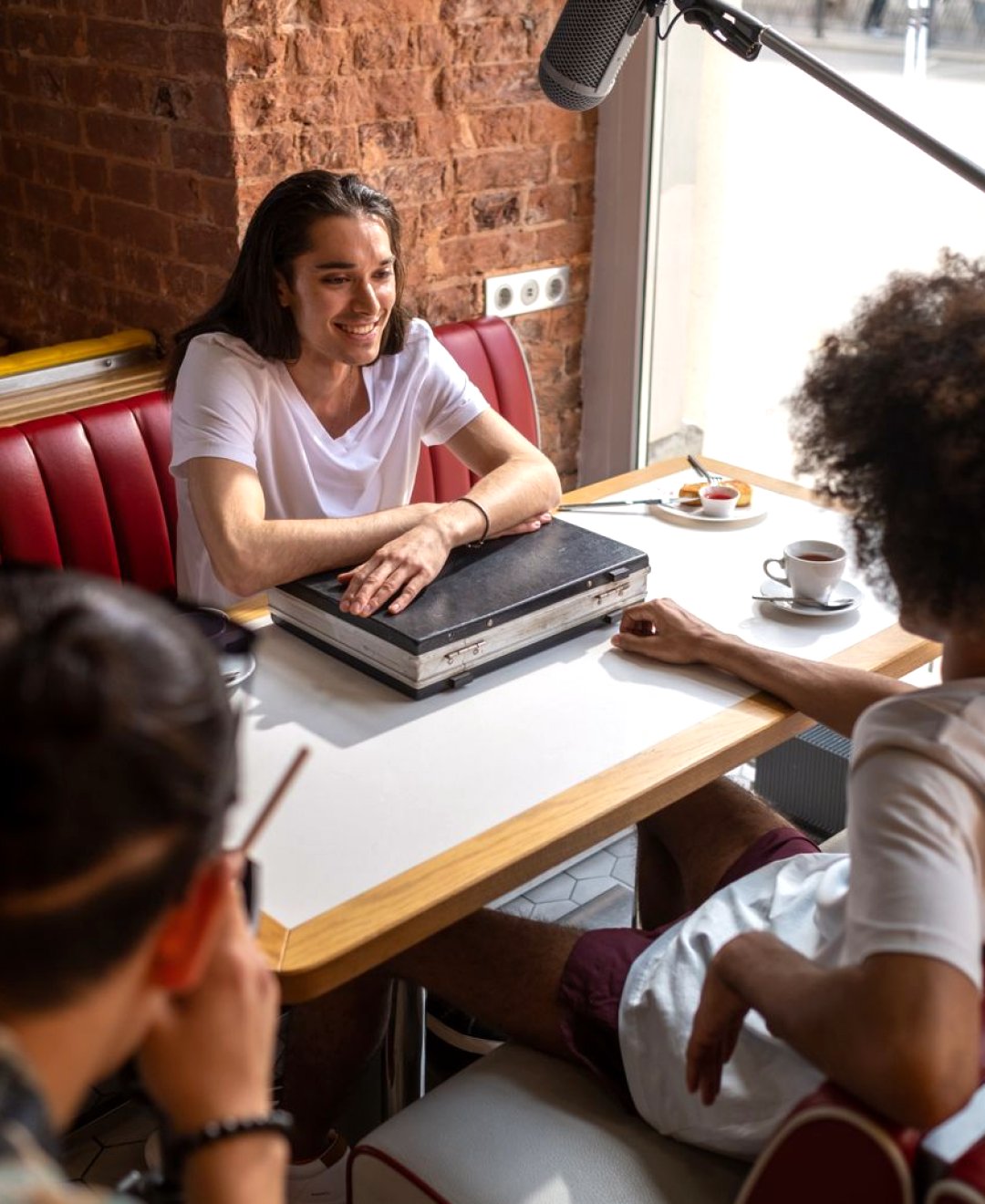
Next came the setup. On a rough floor plan of the hall she placed two chairs at a slight angle, rather than facing each other, and marked the camera just beside her own shoulder so the speaker would look near the lens without staring into it. She noted the window on the left and wrote beside it that the light would change by late morning.
None of this needed drawing skill. Boxes, arrows and a few words were enough for a helper to read it cold.
- Nine questions grouped into three movements
- Chairs set at an angle, camera beside the interviewer
- Window position and likely light change noted on the plan
Choosing cutaways before the day, not during it
The part Morag found most useful was the cutaway list. Beginners often leave the room with an hour of talking and nothing to look at while the voice plays. We went back through each of her three movements and wrote beside it what the viewer could see: the new roof timbers, the noticeboard in the porch, hands setting out stacking chairs, the kitchen hatch.
Each idea was tied to a question. When the speaker talked about the repairs, the outline already said which detail shots would sit over that answer. This made her filming day shorter, because she was no longer wandering the building hoping to spot something usable.
She also marked two cutaways as optional. A plan should say what is essential and what can be dropped if time runs out, and that small honesty saved her later.
What changed on the filming morning
Morag told me afterwards that the first ten minutes felt different. She arrived with the outline folded in her bag, placed the chairs where the plan said, and had the camera positioned before her speaker walked in. The person she was filming, a retired joiner named Alasdair, noticed that she seemed unhurried and relaxed accordingly.
She followed the nine questions in order but let two answers run longer than planned, because the outline gave her permission to skip the final movement's second question without losing the thread. When the light shifted near the window, she had already written down that it would, and moved the chairs a metre without fuss.
She did not get everything. One cutaway, the kitchen hatch, was impossible because the room was locked. That is exactly why it had been marked optional.
What Morag would do differently
When we reviewed the footage together, her own list of changes was short and practical. She wanted a second outline line for sound, because a heater in the hall hummed under the first answers. She wanted to confirm access the evening before rather than relying on an email, and to ask the speaker to bring something to hold or point at, which would have given her one more natural visual.
I mention these because a case like hers is useful for its small corrections, not for a tidy result. The outline did not make the interview perfect. It made the problems visible early enough to deal with, and it gave her a document she could hand to a colleague for the next report.
She has since reused the same page structure for a second interview, changing only the room and the movements.
- Add a sound line to the outline
- Confirm access the evening before
- Ask the speaker to bring an object to show
Keeping the outline simple enough to use
The lesson I take from Morag's case is about restraint. An interview outline works when it fits on one sheet and can be read in a minute by someone who was not in the planning conversation. Purpose of each movement, positions of chairs and camera, a short cutaway list, and one note on light and sound: that is usually enough.
Students sometimes feel the plan should be longer to look professional. It should not. Every extra line is something to maintain on the morning, and the morning is when you have least attention to spare.
If you are preparing your first interview this season, begin with the questions you would actually want answered, then give each one a place in the room and something to look at. Everything else can wait until the plan has survived a first read-through.
Morag's case shows that an interview becomes calmer when the scene is planned before anyone sits down. A trimmed set of questions, a floor plan with the camera marked, and cutaways tied to each answer gave her a morning she could manage alone. The plan did not remove every problem, but it showed them early. For your own first interview, keep it to one readable sheet and mark clearly what is essential.