
Teaching approach
How lessons, independent practice and feedback fit together on the course, and what each instructor contributes.
Method
How each module moves from task to feedback
Every module follows the same pattern, so you always know what comes next. You are given a task, you work on it alone, you receive feedback and then you revise. This rhythm keeps the learning practical and lets you see your own plans improve.
Read the task brief
Each module opens with a short brief that explains the planning problem, the document you will produce and what a clear result looks like. You read it before doing anything else and note any questions to raise later.
What you leave with
A clear understanding of the document you are about to produce.
Work on your own project
You apply the task to your chosen subject, working at your own pace with paper, notes or a computer. The instructor responsible for the module has written the guidance, so you can follow it without waiting for a session.
What you leave with
A first draft of the module document, however rough.
Send it for feedback
You submit your draft and an instructor reads it as a crew member would. Comments focus on what is unclear, what is missing and what would cause trouble on a real shoot.
What you leave with
Written comments pointing to specific changes.
Revise and tidy
You rework the document using the feedback, correcting unclear frames, adding missing details and simplifying where needed. Revising is where most of the learning happens, so we ask you not to skip it.
What you leave with
A second version that someone else could use.
Carry it into the next module
The finished document becomes the starting point for what follows. A shot list informs storyboards, locations inform camera plans and everything feeds the final schedule.
What you leave with
A growing set of connected planning documents.
What shapes the way we teach
Clarity
We ask that every plan can be read by a stranger. Feedback points out wording that is vague and frames that could be misunderstood, so your documents get simpler and easier to share.
Preparation
We treat planning as the main task rather than a chore before filming. Exercises push you to check sites, permissions and light early, because early checks prevent most problems on the day.
Practicality
Tasks reflect real conditions: limited budgets, changing weather and small crews. We would rather you learn a simple method that works than an elaborate one you never use.
Encouragement
You are a beginner or early in your career, and the feedback is written with that in mind. It names what works, explains what to change and leaves the decision about your project with you.
Working alone, with an instructor within reach
Most of your time on the course is spent working by yourself on your own project. That is deliberate. Planning is a habit you build by doing it, and the guided exercises give that practice a shape without taking the work out of your hands.
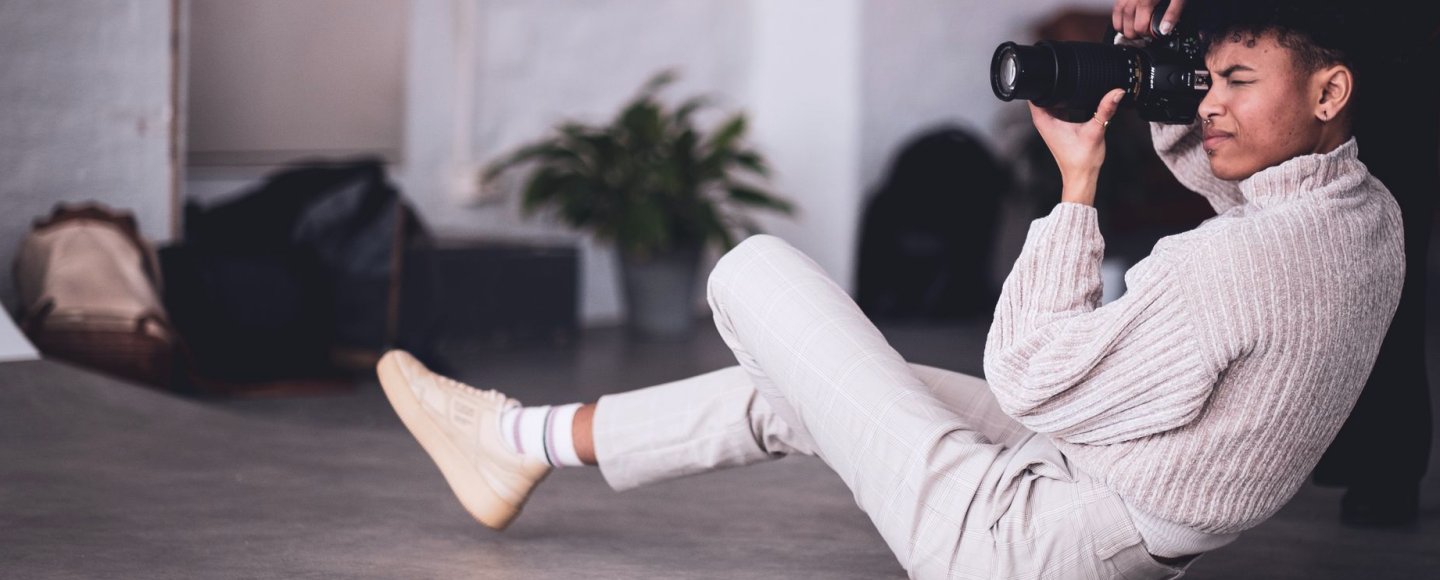
Independent study begins with choosing something you care about. A small factual subject is ideal, because it lets you make decisions that matter to you. You might plan a short report on a local trade, an interview with a community volunteer or a few minutes of footage for a work newsletter. Whatever you choose, it stays with you through every module, so each exercise adds to something familiar rather than starting from nothing.
Fiona MacAllister looks after the storyboard and shot list modules and reads your early drafts with an editor's eye. She asks plain questions: what is this frame for, and could someone else draw it from your note? Callum Reid, who worked as a location manager, takes over when you reach sites and permissions, and tends to ask whether you have actually checked a detail or only assumed it.
Priya Sharma, a working camera operator, comments on camera positions, framing and lighting plans. Her feedback is grounded in what happens at a real shoot, such as where cables run and how window light shifts across an afternoon. Between them, the three instructors cover the full chain from idea to schedule, and each one reads your work in the area they know best.
You are encouraged to keep a short planning journal alongside the exercises. A few lines after each task about what was easy, what caught you out and what you would change is enough. Reading it back before the next module often shows patterns, such as a habit of underestimating setup time, that you can correct before they cost you on a real shoot.
The realistic outcome is modest and useful. You will plan factual shoots with more confidence, produce documents others can follow and know which questions to ask before you film. You will not become an expert in a few weeks, and nothing here promises that. What you gain is a reliable method, practised on your own work and refined with feedback.
Get in touch
Email: [email protected]